Fast manufacturing
PCB-patterned windings support design iteration and repeatable manufacturing.

PRIMARY PRODUCT
180 W-Class PCB Axial-Flux Motor for Robotic Joints
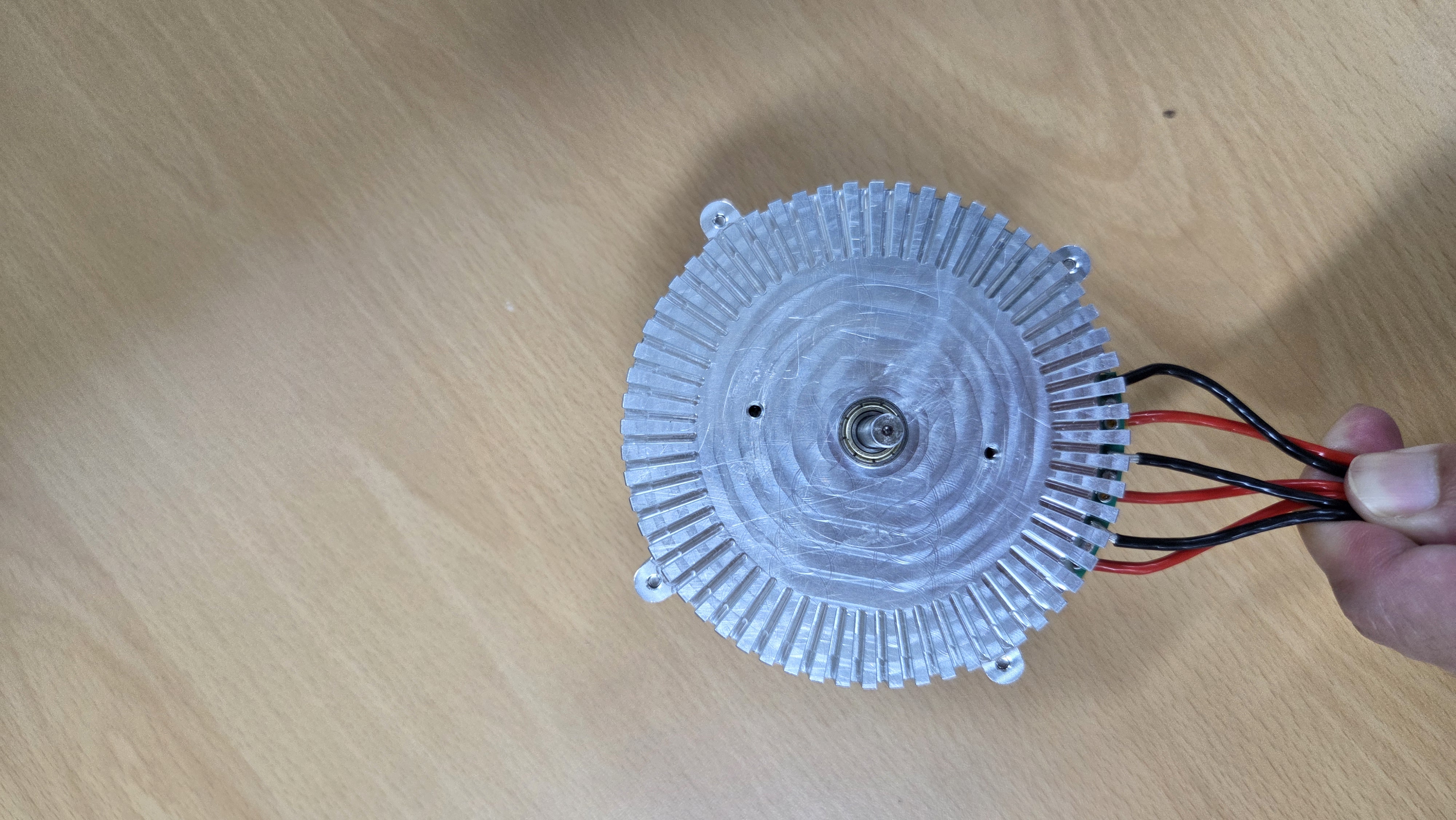
Our robotic-joint motor program combines a PCB stator, axial-flux architecture and thermal management. Integrated inductance technology addresses control characteristics and system integration within limited joint space.
180 W is a development target, not a validated rated output. Photographs show an actual PCB motor prototype, not a confirmed final J180 model.
Discuss a PoC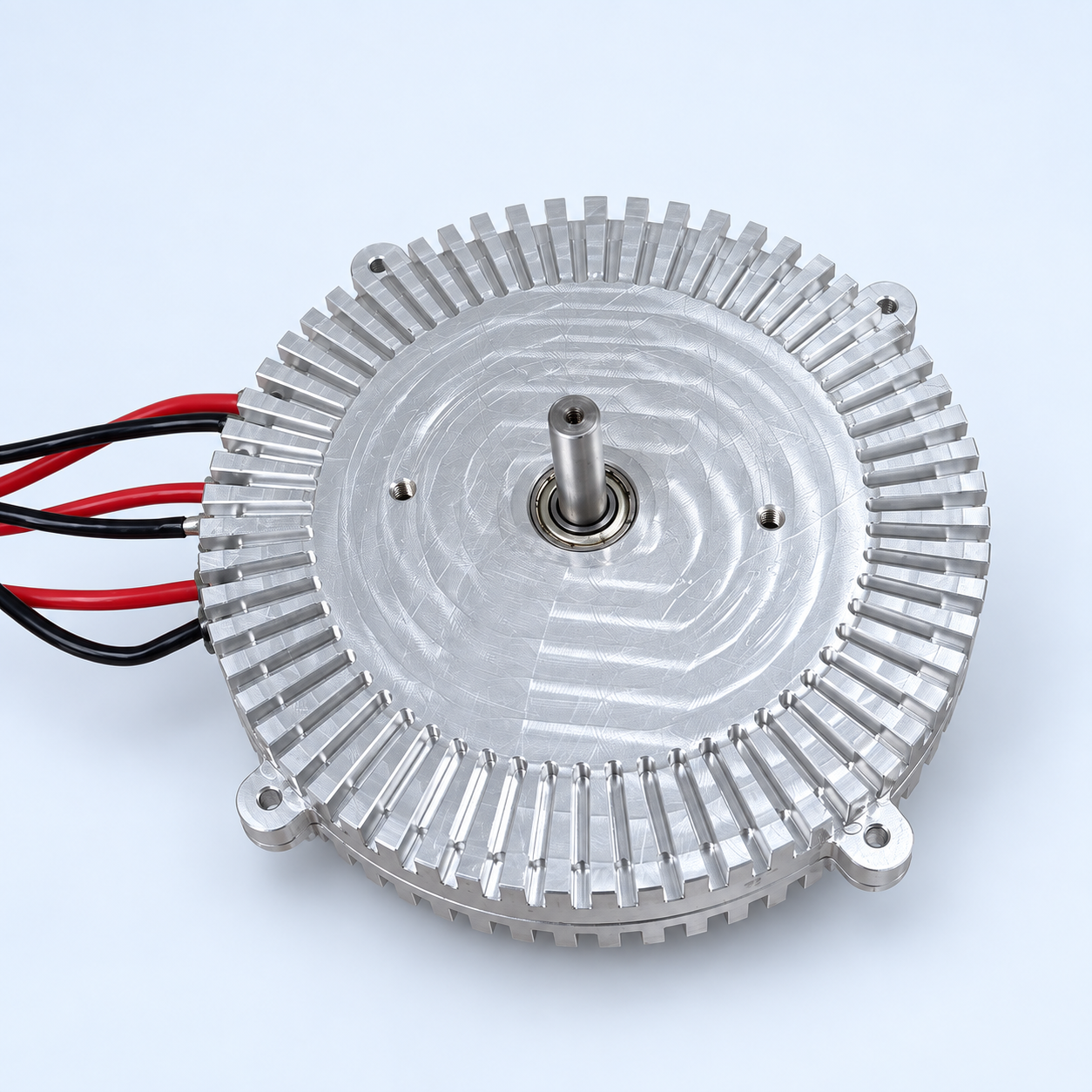
BUILT HARDWARE
From printed windings to physical hardware. We have built PCB stators and motor prototypes to explore robotic-joint integration.
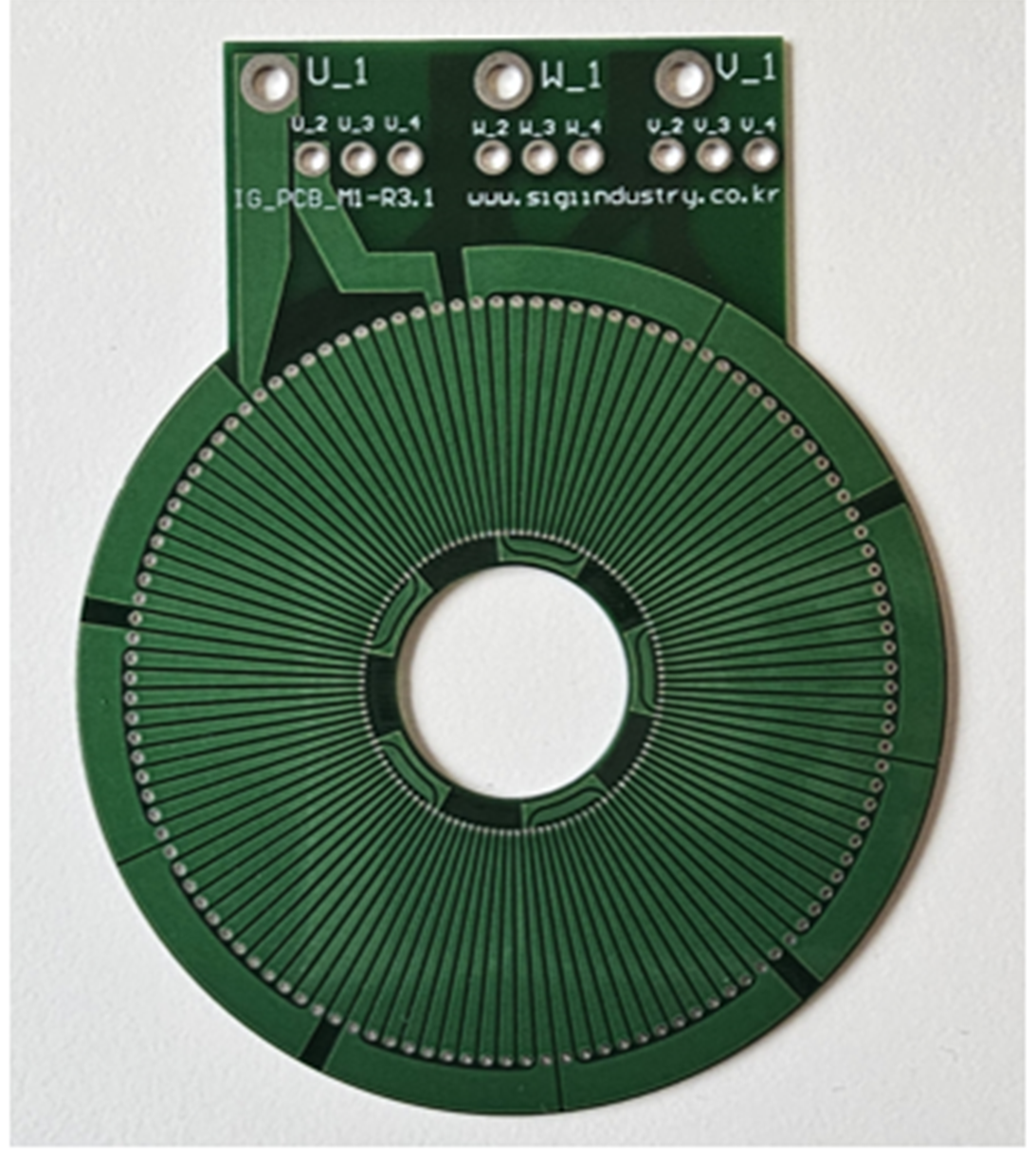
01 / PCB STATOR
02 / MOTOR PROTOTYPE
APPLICATION DEVELOPMENT
Evaluation and integration around joint packaging and motion requirements.
PRINTED WINDINGS
Conventional wound coils are replaced by precision-patterned PCB conductors, enabling a thin, repeatable and highly integrated axial-flux architecture.
PCB-patterned windings support design iteration and repeatable manufacturing.
Planar windings and axial-flux architecture support thin packaging for compact joints.
Electromagnetic, current and thermal design are optimized toward application torque requirements.
Design addresses torque ripple and electromagnetic excitation for smooth rotation.
Robotics and collaborative robots are the primary focus, with potential extensions to HVAC, small fans, pumps, fluid-transfer systems and premium appliances.
Manufacturing efficiency, high torque and low vibration are development objectives. Comparative performance is evaluated through defined test conditions and measured results.
LOW INDUCTANCE
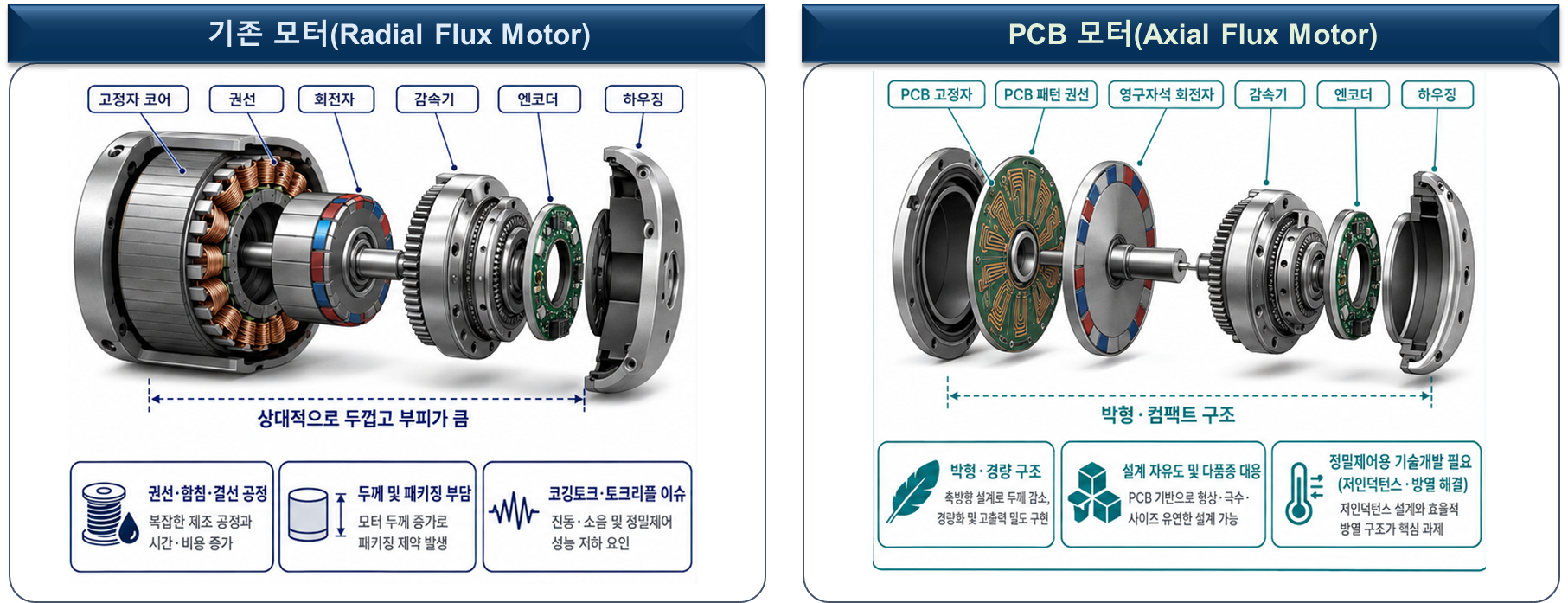
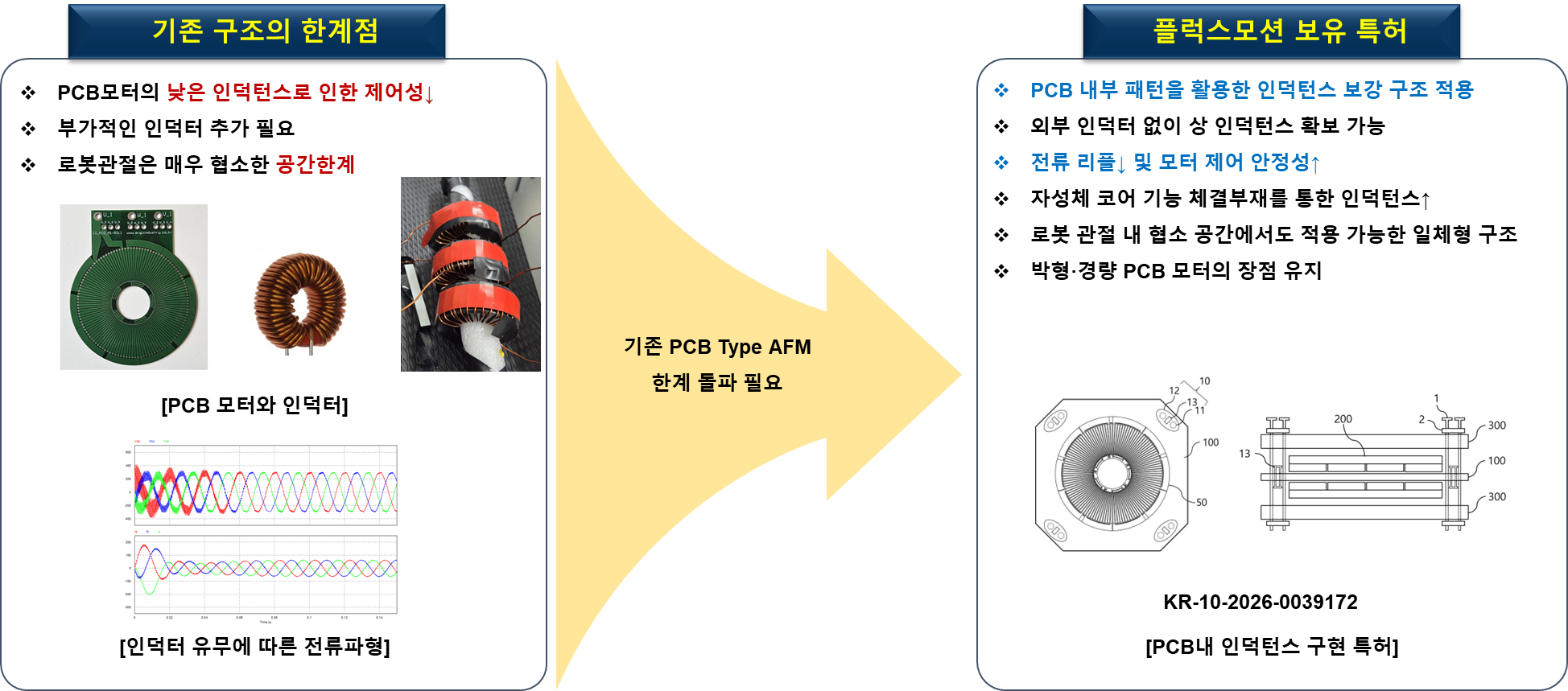
Low phase inductance can increase current ripple and complicate control. Adding external inductors introduces components and volume, reducing the packaging advantage in a compact robotic joint.
FLUXMOTION TECHNOLOGY
Addressing low inductance while preserving the thin and lightweight advantages of PCB motors. The technology uses PCB patterns and an integrated fastening structure with a magnetic-core function.
Diagram shows the technology principle. The extent of improvement is subject to validation for each design and operating condition.
PRIMARY APPLICATIONS
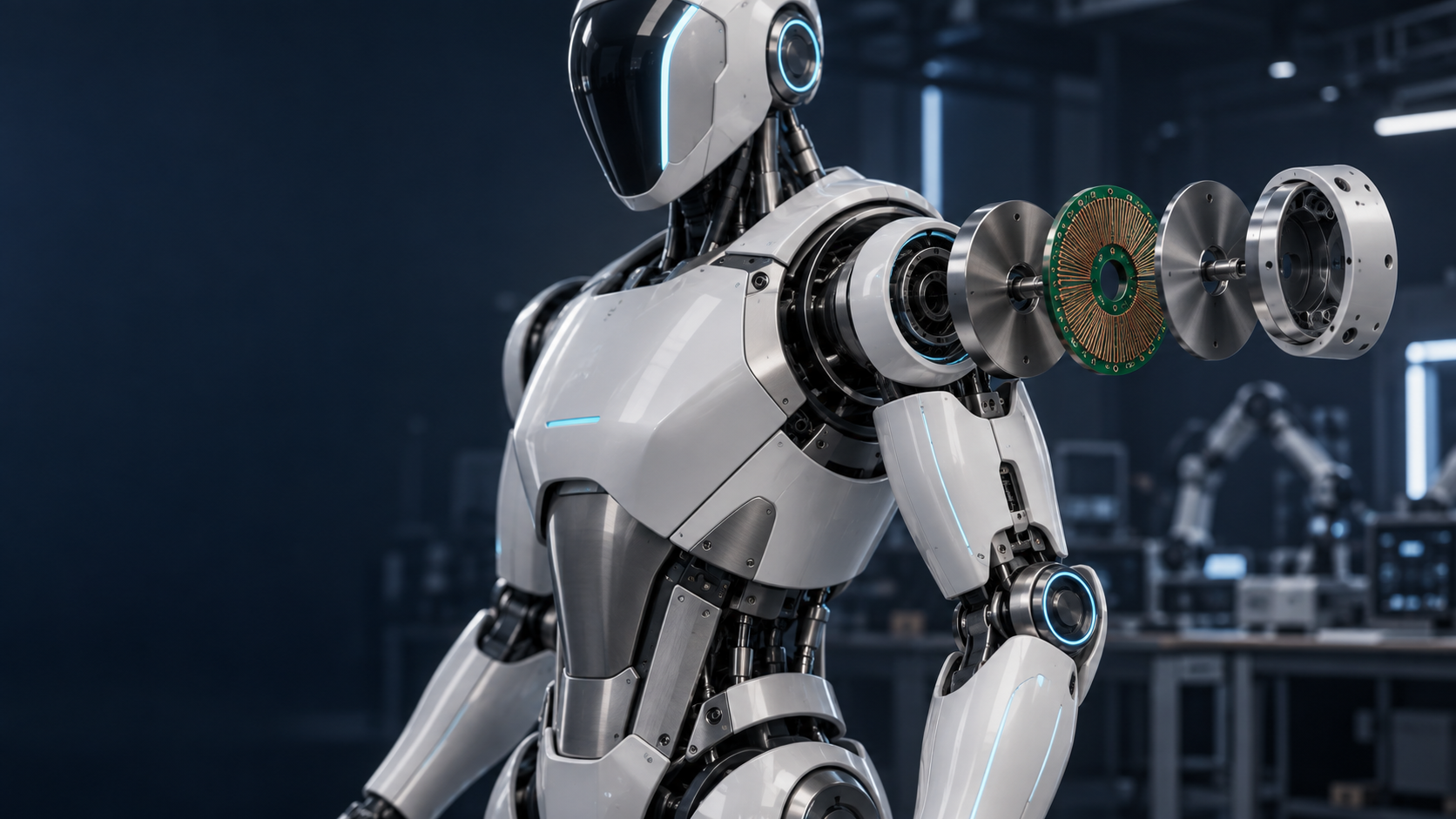

Joint actuation within compact humanoid structures.
Motor evaluation and integration for application requirements.
Collaborative development toward actuator and joint-module integration.
Robot images are application concepts. These are motor and integration development directions, not an offer of a completed actuator.
CONTACT FLUXMOTION
For robot, motor and actuator companies, technology partners and investors.
slowindgo@gmail.com ↗